Course Content
Orientation
This course teaches employees how to create and manage strong, unique passwords to protect business accounts and data from unauthorized access. Participants learn best practices for building complex passwords, using password managers safely, and avoiding common mistakes like reuse or weak patterns. Understanding the importance of strong passwords helps reduce the risk of cyberattacks and data breaches caused by compromised credentials.
0/2
Passwords and Authentication
A strong password is one that is difficult for others — and even automated tools — to guess or crack. It should be at least 12 characters long and include a mix of uppercase and lowercase letters, numbers, and special symbols (like !, @, or #). Avoid using personal information such as names, birthdays, or common words, as these can be easily discovered through social media or brute-force attacks. Instead, create passwords using random combinations of unrelated words or phrases — for example, “Coffee!Tree4Ocean.” Password managers can also help by securely generating and storing complex passwords for each account. The key to password security is uniqueness: never reuse the same password across multiple systems.
0/6
Phishing and Email Threats
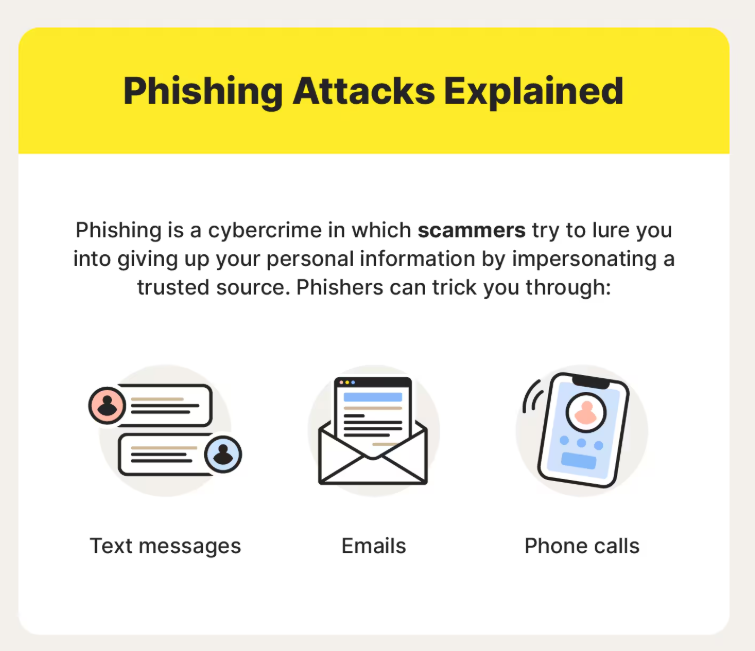
Phishing is a type of social-engineering attack where criminals pretend to be a trusted person or organisation to trick you into revealing sensitive information. This is a very common type of cyber-attack in today's world. As we go through this module we will learn how to identify and mitigate phishing attacks.
0/1
Social Engineering
Malware, Viruses & Ransomware
Safe Internet & Device Usage
Data Protection and Privacy
Physical Security
Protected: Security Awareness Training

Phishing is a type of social-engineering attack where criminals pretend to be a trusted person or organization to trick you into revealing sensitive information (passwords, bank details, or company data) or into performing an action (clicking a malicious link, downloading malware, or making a payment). It most commonly arrives as an email but also appears via SMS (smishing), voice calls (vishing), instant messages and social media. Attackers use urgency, fake branding, spoofed sender addresses and personalized details to make the request look legitimate.