The Reality of Today’s Digital World
We live and work in an increasingly connected environment. Every email we open, website we visit, and document we share forms part of a larger digital ecosystem – and that ecosystem is constantly being targeted by cybercriminals.
In South Africa, cybercrime has surged dramatically over the past few years. Businesses of all sizes, especially schools, law firms, and SMEs, are prime targets because attackers know that smaller organizations often lack the same defenses as large corporations.
According to Mimecast’s State of Email Security Report, South Africa consistently ranks among the most targeted countries in the world for phishing and business email compromise. This isn’t abstract – it affects businesses just like yours, right here at home
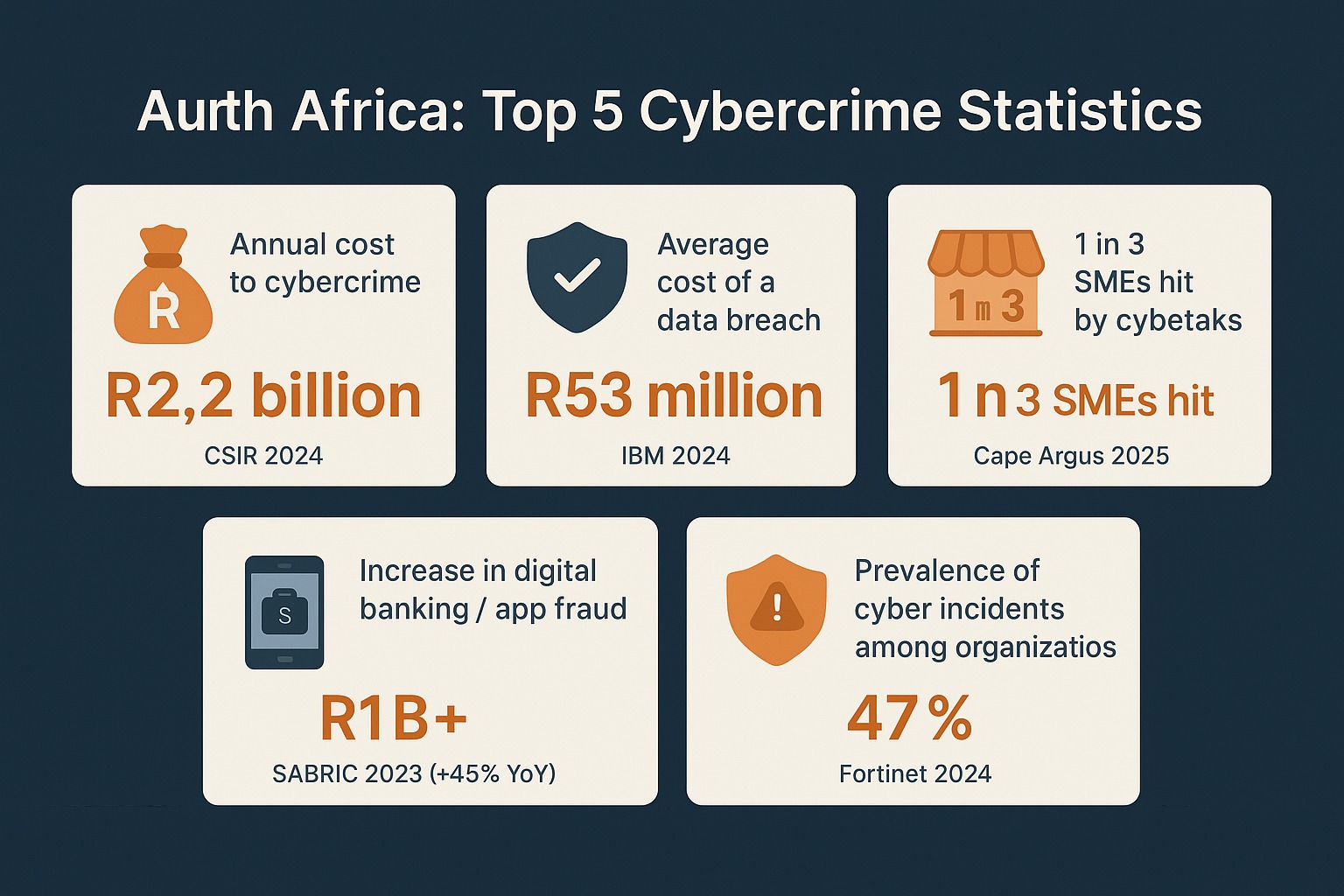
Cybercrime on the Rise – South Africa is a High-Risk Target
- South Africa is often cited as the most targeted country in Africa for ransomware and information-stealer attacks. ESET
- According to ESET data, roughly 40% of ransomware attacks on the African continent occur in South Africa. iAfrica.com
- And nearly 35% of infostealer incidents across Africa are traced back to South Africa. iAfrica.com
- In the government and public sector domain, organizations in South Africa reportedly face 3,480 cyberattacks per week per entity. Intelligent CIO
- The financial impact is severe: one report places the average cost of a data breach at R 53 million in 2024, with the worst cases reaching R 360 million. corbado.com
- Nationally, data breaches are estimated to cost South Africa R 2.2 billion annually. corbado.com+1
- In 2023, South African consumers lost more than R 1 billion through crimes tied to digital banking and mobile apps. Sunday Independent
These aren’t just statistics – they represent real breaches, real loss, and real reputational damage to businesses like yours.